Decoding Regional Compliance: Payment Methods That Thrive in Canada's Varied Poker Landscape
Ines Long · Aug 21, 2026

Decoding Regional Compliance: Payment Methods That Thrive in Canada's Varied Poker Landscape
Canada's poker environment operates under a patchwork of provincial regulations that shape which payment methods succeed, and observers note how these rules create distinct patterns in transaction preferences from coast to coast. Ontario's regulated market, for instance, has integrated specific banking channels since its launch, while other provinces maintain different approaches through their own gaming authorities. Data from regulatory filings show that Interac e-Transfers remain a dominant option because they align with existing Canadian banking infrastructure and meet verification standards required by multiple jurisdictions.
Ontario's Regulated Framework and Transaction Options
Ontario established its online gaming framework through the Alcohol and Gaming Commission of Ontario, which mandates that operators use payment processors capable of detailed transaction reporting. Research indicates that credit and debit card deposits processed through Visa and Mastercard networks account for a substantial share of activity, largely because these systems include built-in fraud detection tools that satisfy provincial oversight requirements. Bank transfers via the Interac network also perform strongly here, since they connect directly to major financial institutions and provide the audit trails demanded by compliance protocols.
Those who track player behavior across the province report that digital wallets such as PayPal and Skrill see steady adoption rates because they separate personal banking details from gaming accounts, a feature that addresses privacy expectations embedded in Ontario's rules. As of August 2026, updates to reporting thresholds have prompted some operators to expand support for prepaid card options, which allow users to maintain spending limits while still meeting identity verification mandates.
Western Provinces and Alternative Banking Channels
British Columbia and Alberta follow separate regulatory paths managed by their respective lottery corporations, and payment method availability reflects those differences. In these regions, direct bank transfers through systems like the Canadian Payments Association network often outpace card usage because they avoid cross-border processing fees that can complicate compliance calculations. Studies from financial oversight bodies reveal that e-Transfer volumes increase during peak tournament periods, since the method supports rapid, low-cost movement of funds between personal accounts and gaming platforms.
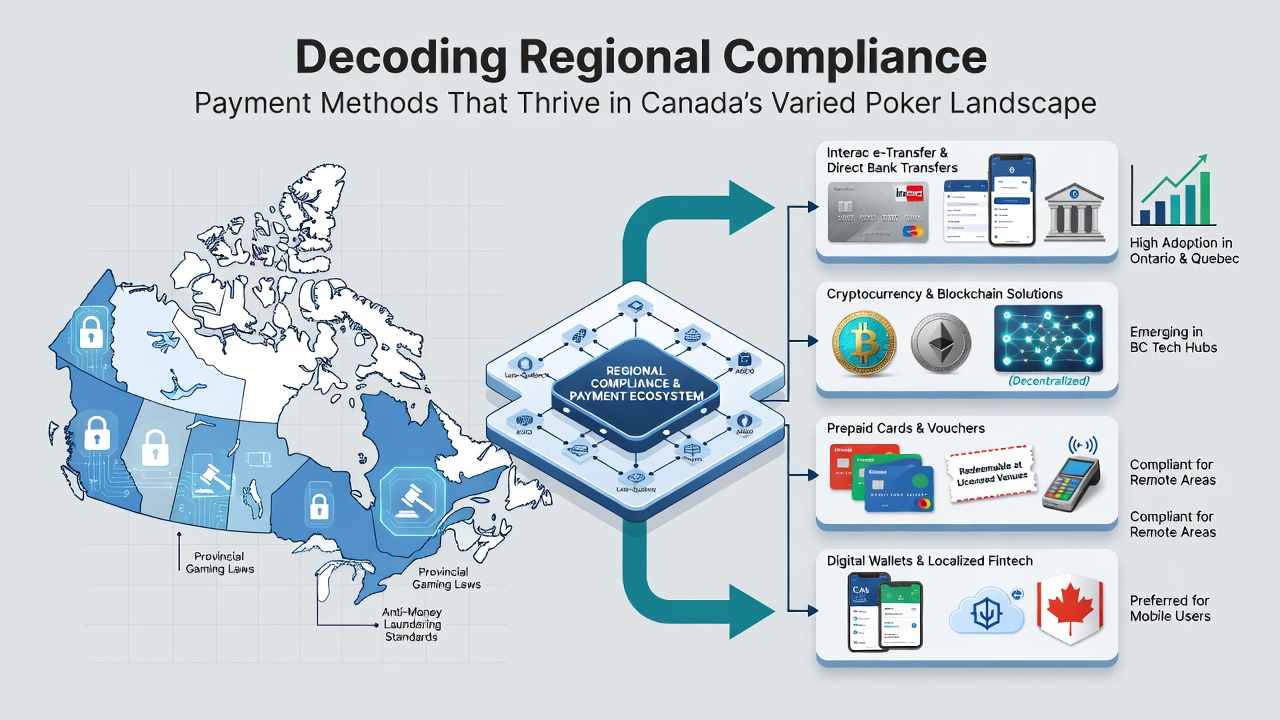
Prepaid vouchers and certain cryptocurrency options appear in limited contexts within these provinces, though their acceptance depends on whether individual operators have secured the necessary approvals from local authorities. Observers note that Western Canadian players frequently combine multiple methods within a single session, using cards for initial deposits and e-Transfers for subsequent withdrawals to navigate varying daily limits imposed by each platform.
Atlantic Canada and Emerging Payment Trends
Provinces such as Nova Scotia and New Brunswick operate under frameworks administered by their own gaming commissions, which emphasize secure fund segregation and clear record-keeping. According to figures from the Statistics Canada payments survey, electronic fund transfers remain the most reliable channel because they integrate with regional credit unions and smaller banks that serve many Atlantic communities. Mobile payment apps tied to domestic banking networks have gained traction here as well, since they provide real-time confirmation features that align with audit requirements.
Case examples from operators licensed in multiple Atlantic jurisdictions show that players often default to methods already familiar from everyday banking, reducing friction during account verification steps. This pattern holds even when alternative options like certain e-wallets become available, because local users prioritize familiarity and speed of reconciliation over novelty.
Cross-Provincial Compliance Considerations
Payment processors that succeed across Canada's poker landscape typically maintain separate compliance teams for each province, since rules on fund segregation, reporting frequency, and player verification differ. Research from the Canadian Gaming Association indicates that operators investing in modular payment systems experience fewer disruptions when provincial rules update, because these platforms can toggle features without requiring full re-certification. Interac-based solutions continue to lead adoption metrics because they operate entirely within Canadian financial rails and avoid the additional scrutiny applied to international card networks in some jurisdictions.
Conclusion
Regional compliance requirements continue to determine which payment methods maintain strong positions within Canada's poker environment. Operators and players alike navigate these variations by selecting channels that satisfy both provincial mandates and practical transaction needs, resulting in a landscape where Interac transfers, domestic bank connections, and select card networks dominate usage patterns. Data collected through 2026 show that platforms adapting their offerings to local rules sustain higher transaction volumes than those relying on uniform national approaches.